
Table of Contents
A few months ago, museums on my feed were posting their team’s baby-photos. These days, it is the Millennial Vs GenZ marketing trend.
These trend-related posts from museums (amusing as they are) might be instances of trend-chasing to stay visible in an algorithm-driven attention age but they end up revealing some interesting things, and pointing toward possibilties worth thinking about.
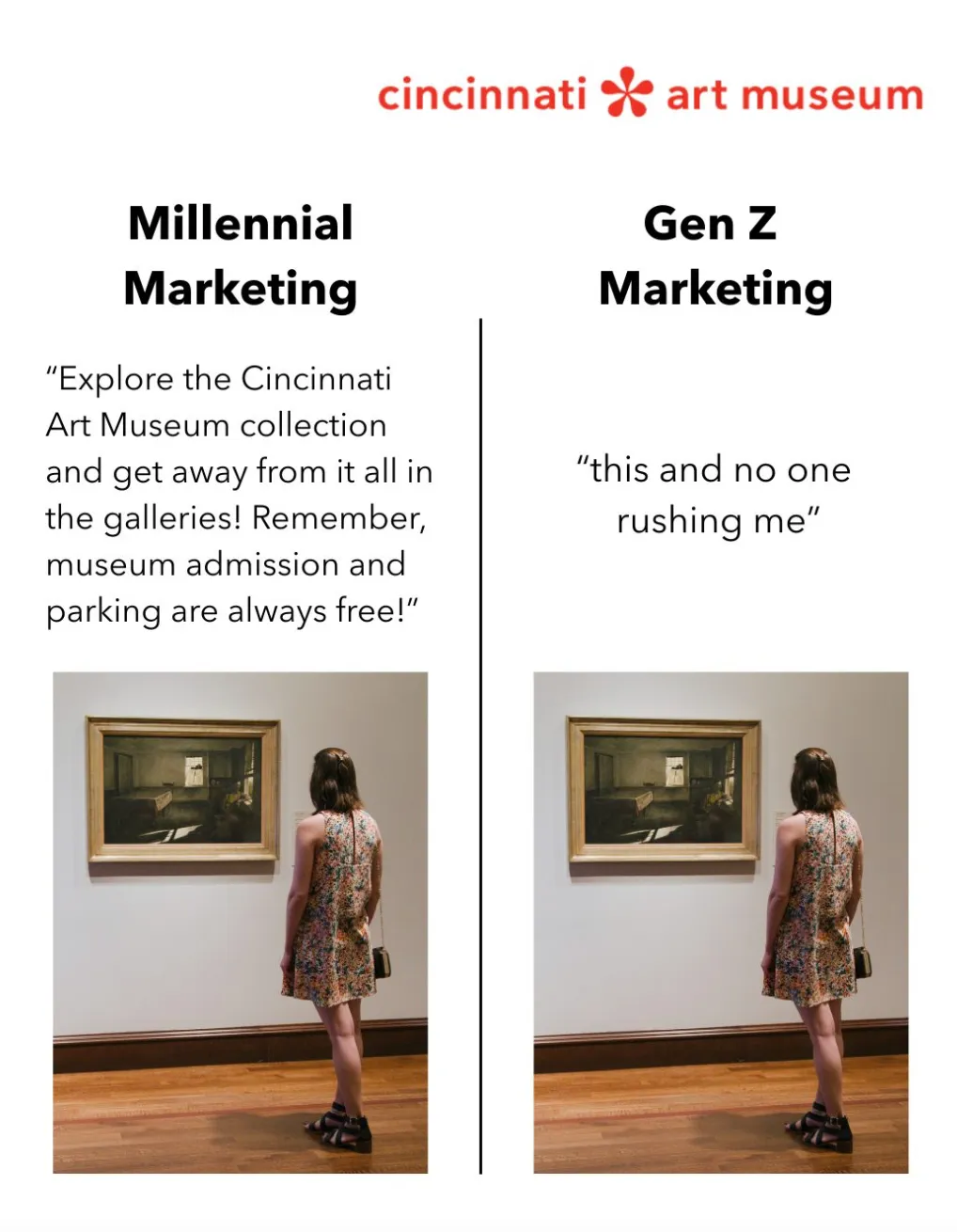
The Gen Z vs Millennial marketing meme
The GenZ vs Millennial caption format assumes a clear divide between one generation’s need for text and the other’s preference for ‘vibe’. It is one of the many trends that lets museums meet people in a visual language familiar to them. I first noticed the Cincinnati Art Museum’s post and in quick succession, others followed.
 More examples: Kunsthalle Karlsruhe, Kunsthalle Mannheim, Royal Brighton Theatre
- With such posts, cultural institutions are acknowledging that people arrive with different contexts and there’s a need to meet them there. This has long been a conference-topic; teen-led advisory councils, and youth-centred programming have been part of ongoing institutional efforts for some years now. The Instagram caption makes the acknowledgement visible, public and shareable - but am curious if museums are actually engaging with GenZ in making such posts or simply performing their own idea of what GenZ sounds like?
- There is also the question of what follows such posts and their success. Is the energy that museums are putting into ‘platform fluency’ also flowing back into the physical experience? Would museums consider a GenZ appropriate communication inside the venue as well? The question I am trying to ask is, that while marketing language is one thing - is there an engagement plan that follows?
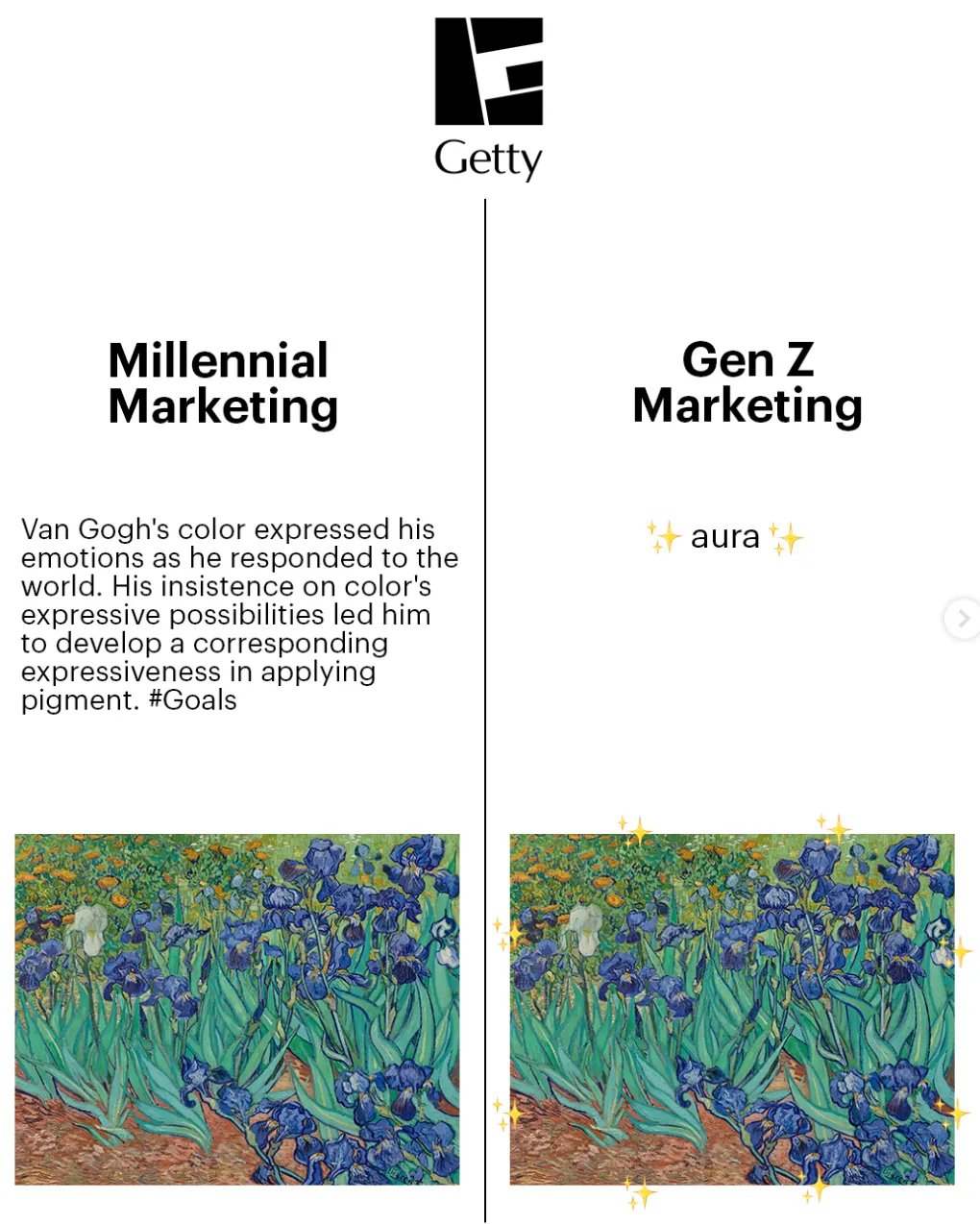
- The trend tries to make a point that GenZ doesn’t want the “fluff” … just straight, to-the-point information. This format might work for marketing exhibitions, events and other offers but I doubt whether it serves collection-related communication as effectively (where context is everything)? - the Getty post is a good example to make this comparison. That said, there is something genuinely useful in the format if you think about it as a sequence rather than an either/or choice. In my workshops on digital storytelling, I’ve often felt that Museum storytelling struggles with developing a 2-3 second hook. The GenZ caption I feel, works well as a ‘hook’; the Millennial caption on the other hand, serves as the context that follows, once the hook has landed.
Team-baby photos trend
Examples: London Museum, International Spy Museum , Science Museum Oklahoma
Most people in my circle outside the cultural sector, cannot imagine what working at a museum looks like. Of course, there is a widespread understanding of the role of a ‘curator’, or even the ‘exhibition planner’… but other roles and range of work in the sector remain poorly understood by audiences around the world. This trend (originally meant to create ‘relatability’) visibilised museum work.
As the Harn Museum of Art wrote in their post-caption:
This trend has taught us that explaining what we do is difficult.
I also loved that the museum led the post-carousel with an image of someone “who keeps tabs on the copyright status and information of 13000+ artworks”.
But if you were to look deeper, these museum-posts also ended up generating a visual of workplace demographics. The lack of diversity in museum work, representation or the gender bias when it comes to leadership positions is striking in some museums.
The Opportunity
Largely, social media has served as a ‘broadcast’ medium for cultural institutions. But these viral trends suggest that there might be more here than just reach metrics.
The baby photos trend for example, create an opportunity to start a conversation on museum-work or ‘who’ works at museums (and by extension, who is the museum for?). Whether it is Dubai, Bangaluru, Mumbai, Singapore, Berlin or Paris - museums serve communities that are culturally diverse. Visitors are tourists, naturalised citizens, second-generation communities (and so on), often with complicated relationships to the museum collections. What kind of opportunities can museums create for members of their local community? A team that reflects the mixed world it serves thinks differently, programmes differently, and asks different questions of its collections. The meme trend made that gap visible.
Another interesting (read relatable) thing a museum could do with a well-received social media post, is design a physical experience that rewards the person who showed up because of it. How delightful would it be, to see a curatorial note signed off with a baby-photo of the curator combined with a Ask-A-Curator interactive? Or an interactive display of crowdsourced GenZ-descriptions alongside the curatorial ones?
The GenZ marketing meme trend too, points to a related possibility. On Getty’s post about Millennial Vs GenZ, someone had commented:
Gen X here. I love these posts. They are like my duolingo for understanding “kids these days.” From an intellectual perspective it’s also always been interesting to explore generational slang.
In a previous post I wrote about museums exploring their role as ‘community hosts’- and this instance makes me wonder if digital channels can be the ‘third space’ that facilitates inter-generational communication and engagement.
Instagram trends might limited life, but these can generate ideas for deeper conversations that can help museums stay relevant.
You can subscribe to the RSS Feed and get updates on posts such as these.